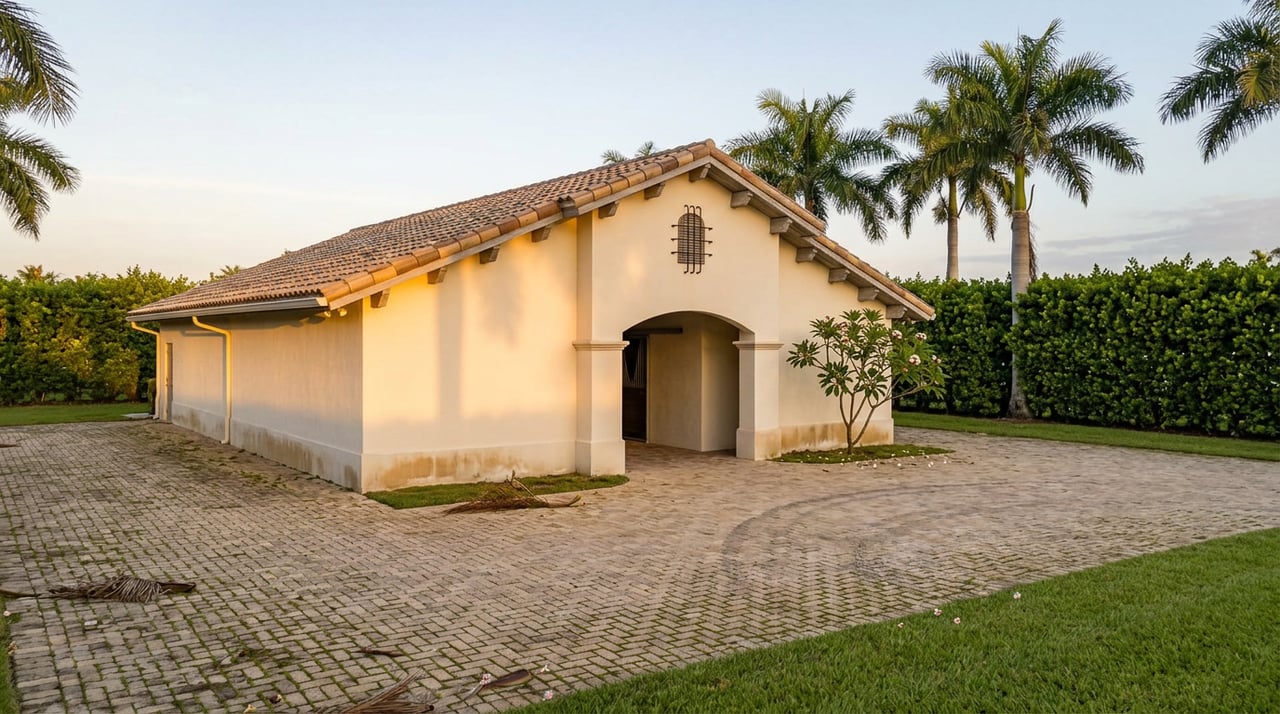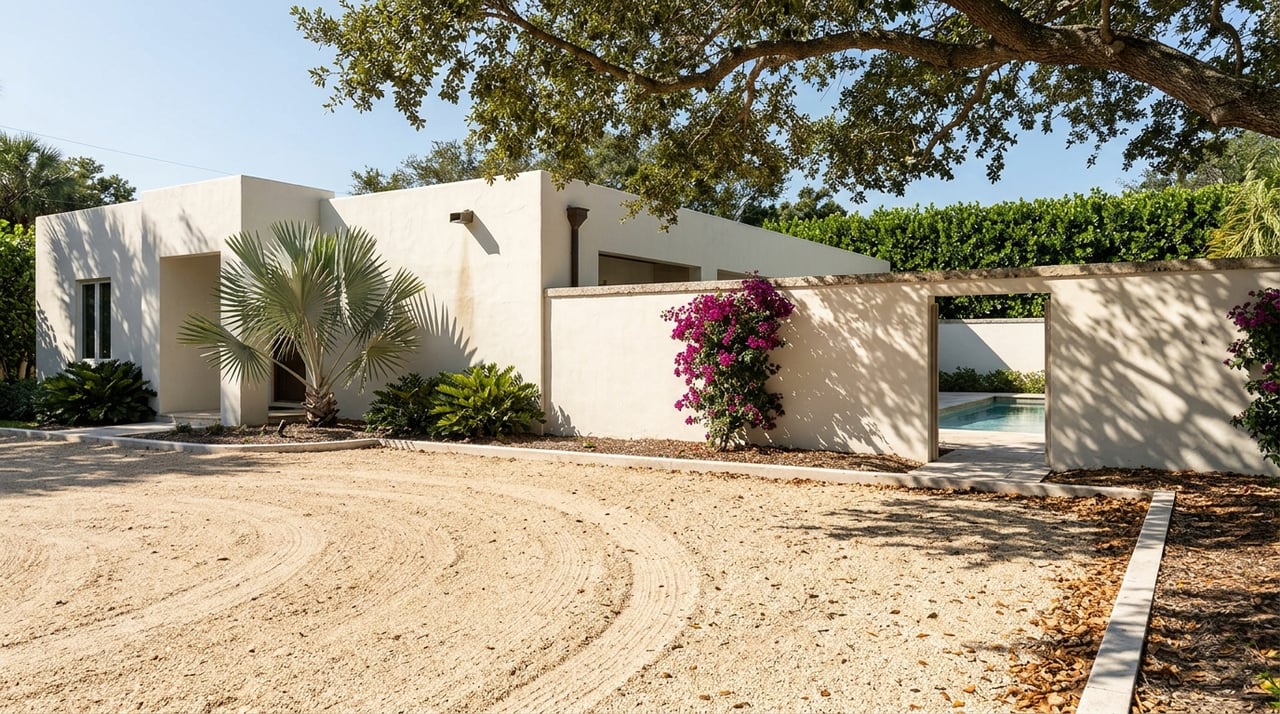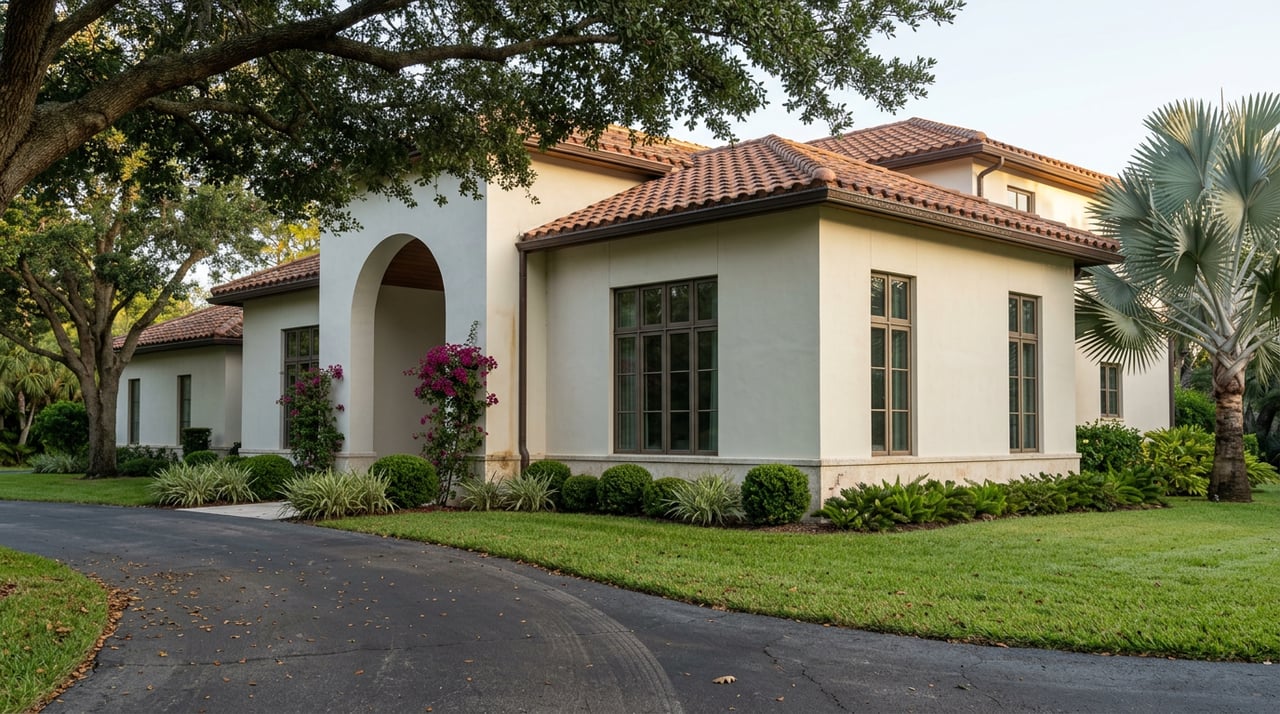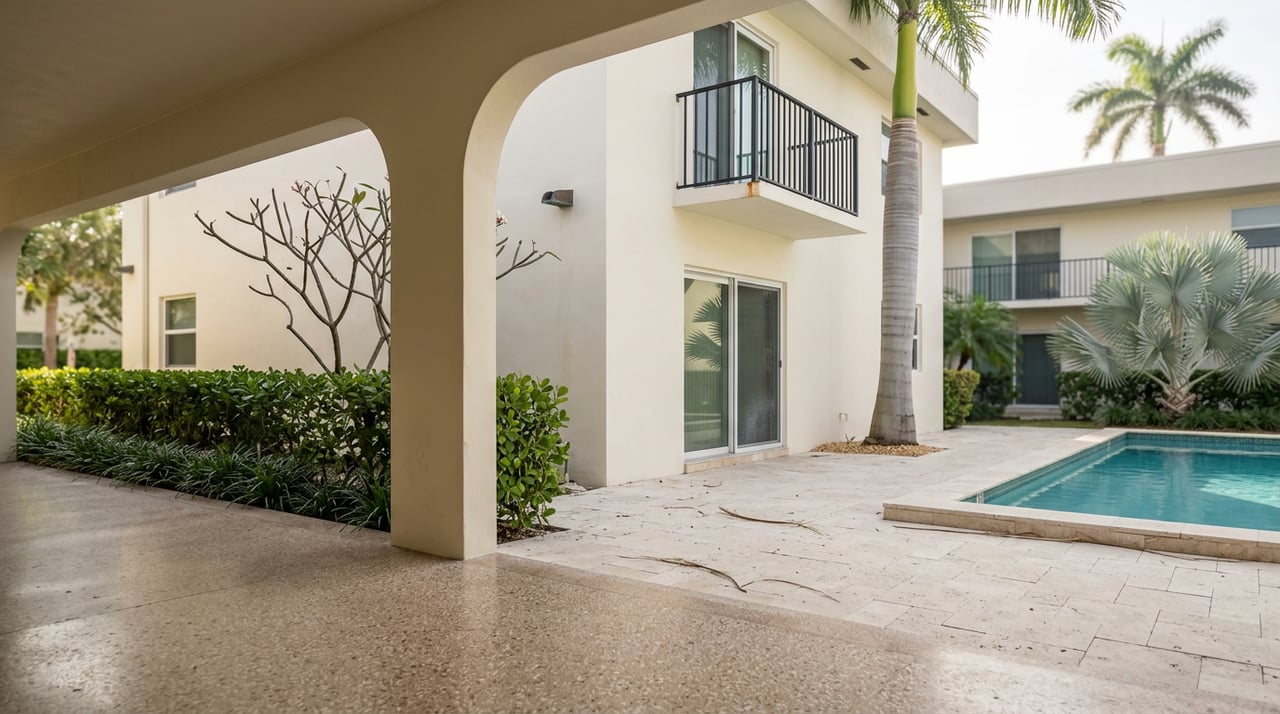
Two nearly identical listings sit inside the same guard gates on Polo Club Drive. Same square footage, similar finishes, comparable views of a preserve. One buyer will write a check every year that is roughly a fraction of what the other buyer writes. Neither listing sheet explains why.
The reason is that Palm Beach Polo is not one community with one bill. It is a mandatory Property Owners' Association layered underneath an optional private club, and in 2026 the POA is mid-transition from developer control to resident ownership. That transition, more than any single sale on Hurlingham Drive, is what determines what a buyer here is actually acquiring.
The structure most listing sheets do not explain
Every home inside the gates belongs to the Palm Beach Polo & Country Club Property Owners' Association, which represents roughly 1,253 homes and about 3,000 residents across the community's villages. POA dues are mandatory, and each village layers its own condominium or sub-HOA rules on top of the master association, so leasing policy, application review, and amenity access vary block by block.
The private country club is a separate legal entity and a separate purchase. Applying for membership requires completing membership documents submitted to the Membership Committee, the recommendation of two current members, and a one-time initiation fee and/or annual dues payment plus Florida sales tax. Membership tiers run executive, reserve, and social-sports, and none of it is required to buy a home behind the gate.
| POA (Palm Beach Polo & Preserve) | Palm Beach Polo Golf & Country Club | |
|---|---|---|
| Required with the home | Yes | No |
| Governs | ~1,253 homes across ~45 villages | Golf, tennis, croquet, dining, social calendar |
| How you join | Automatic at closing | Application, two member sponsors, initiation and annual dues, plus FL sales tax |
| What it collects | Annual assessment plus village-level dues | Initiation and tiered annual dues |
| Who controls it | Elected resident board | Club ownership |
The listing you read on a portal reflects only the POA side of that equation. The club side is a second decision, made after closing, with its own economics.
The $30 million handoff quietly changing the math
The more interesting story sits inside the POA's own announcements. The association has been steadily acquiring amenities from the community's original declarant, Palm Beach Polo Inc., an entity controlled by developer Glenn Straub. The Dunes Course has already been converted to the Dunes Preserve and folded into association control. The next tranche is larger.
A $30 million acquisition consists of the present clubhouse, parking lots, the croquet fields totaling 13 acres, and the 93-acre Big Blue Preserve, and does not include the part of the driving range still owned by the declarant, which has been rented to the entity purchasing the Cypress Course on a year-to-year basis. The POA has been explicit about how it plans to pay for it. The cost will be included in a new financing package added to the annual fees, and no special assessment will be required.
For a buyer, that language is the number that matters. There is no lump-sum shock at closing tied to the acquisition, but the annual carrying cost of ownership inside the gates is being redefined in real time. The upside the POA argues for is straightforward: for the first time in three decades, residents will have a community center owned and operated for the use of residents and their guests, the threat of future development on open spaces is removed, and home values should benefit from the addition of a resident-controlled communal center. Whether that thesis holds is a matter for underwriting, not marketing copy.
What actually happened to the golf
Any buyer who tours the community should understand that the golf product they see today is not the golf product that existed five years ago, and not the one that will exist five years from now.
The Cypress course, designed by Pete Dye and his son P.B., was initially built for the Chrysler Team Championship on the PGA Tour. That course has been sold. Marketing copy on newer listings already references "the soon-to-be The Wellington Golf Course" when describing views from Mizner Estates, a signal that the rebrand and operator change are in progress and that any pro-forma written around old membership assumptions is stale.
At the same time, new supply is being introduced at the top of the market. Farrell Estates is a new-construction enclave of 27 custom single-family estate homes inside Palm Beach Polo, built by The Farrell Companies on a former golf-course site. Homes are reported in the 5,300 to roughly 8,900 square foot range, and the developer launched sales at the very top of Wellington's market. The site is the former East Course, roughly 23 acres at 11153 Polo Club Road. Blue Cypress is closing out the last of its new-construction phase, delivered by TR Development with interiors by Soco Interiors, and Cypress Island and Blue Cypress have been described by the POA as close to sold out.
The takeaway is that anyone underwriting a Palm Beach Polo home against last cycle's comps is pricing a different community than the one that will exist at the next resale.
Where your money lands, by village
The community has approximately 45 sub-villages, and the price band a buyer enters is a function of which one. A short map of where the estate pricing concentrates versus the entry-level product:
- Estate and single-family tier: Maidstone, Hurlingham, Kensington, Cypress Island, Mizner Estates, Fairway Island, Golf Brook, Blue Cypress, Bel Air, Bridle Path, Chukker Cove, Eagle's Landing, Long Meadow, Polo Island.
- New construction, top of market: Farrell Estates on the former East Course, and the final Blue Cypress residences.
- Villa, townhome, and condo tier: Cowdray Park, Las Casitas and Vista Del Prado, St. Andrews at Polo Club, Windsor Way, Golf Cottages, Bungalows, Bagatelle, First Fairway, Hurlingham condos, La Quinta, Meadow Brook, Muirfield Townhomes, Oak Tree, Pebblewood, Shady Oaks, Tennis Lodges.
Each village carries its own association with its own budget, its own leasing rules, and its own application process. Two homes sitting a quarter mile apart can produce meaningfully different annual carrying costs and meaningfully different leasing flexibility for a seasonal buyer. That is the specific due diligence line the portal does not surface.
A diligence order for this specific community
For a buyer moving from an offer to a contract inside Palm Beach Polo, the order of questions matters more than the questions themselves.
- Pull the specific village's HOA budget, reserve study, and leasing rules before writing the offer, not after inspection.
- Confirm in writing whether any club membership is required with the home, and if so, at which tier, and at what initiation and annual cost including Florida sales tax.
- Ask the POA office how the pending Polo House and Big Blue acquisition is being amortized into annual fees for the next assessment cycle.
- Verify which golf entity is now operating the former Cypress Course, and what, if any, access or reciprocal arrangement attaches to your specific village.
- On new construction inside Blue Cypress or Farrell Estates, read the builder specifications, finish allowances, warranty, and completion timeline against the contract, not the marketing.
- Confirm the FEMA flood zone and school assignment by address with Palm Beach County, since community-wide summaries do not bind either.
None of this appears on a portal. All of it changes what a buyer is actually paying for.
FAQ
Is the country club membership required to buy in Palm Beach Polo?
No. Membership at Palm Beach Polo Golf & Country Club is a separate application to a separate entity, and homeowners can decline it and still use POA-controlled amenities under the association's rules for their village.
What does the POA's acquisition of the Polo House mean for a buyer this year?
It means the annual assessment will absorb the financing of the acquisition rather than a one-time special assessment. Ask the POA office for the current projection before closing, so the number you underwrite is the number you will actually pay.
Is the Cypress Course still the Cypress Course?
The Cypress Course has been sold, and listings inside the community are already referencing its planned rebrand as The Wellington Golf Course. Any assumption of continued play access tied to the old operator should be verified in writing.
What is Farrell Estates, and does it affect resale values elsewhere in the community?
It is a 27-home new-construction enclave from The Farrell Companies on the former East Course, priced at the top of Wellington's market. Its arrival changes the ceiling comps for estate villages and puts pressure on dated interiors elsewhere to trade at a condition discount.
Why is the community sometimes called Palm Beach Polo & Preserve?
Because the POA has been rebranding around the preserves it now controls, including the Dunes Preserve and the pending Big Blue acquisition. The country club retains its original name; the resident association is the entity that has moved.
If you are underwriting a home inside Palm Beach Polo, or considering an off-market opportunity in Farrell Estates, Blue Cypress, or one of the estate villages, the questions above are worth answering before you tour, not after. James Faloni works quietly with buyers and sellers across Wellington's country-club and equestrian communities, and can walk through the POA budget, club tier, and village-specific diligence on a specific address. Let's Connect.